
How MultiFIX Supports Root Exudates, Mucilage and Rhizosphere Growth
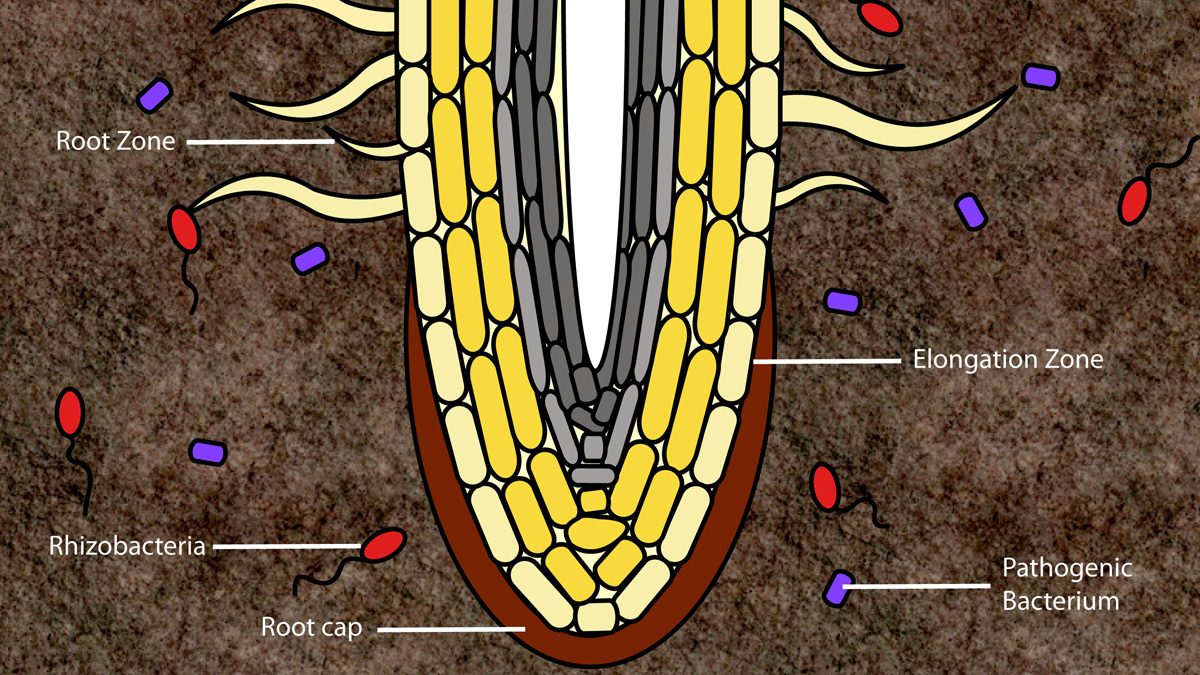
The most important work in farming happens below the soil surface. Around every active root is the rhizosphere, where roots, microbes, water, minerals and organic compounds interact to shape crop performance.
When this root-zone system is active and well fed, crops are in a stronger position to use water more efficiently, cycle nutrients more effectively and handle stress more successfully. MultiFIX supports this living system by feeding the beneficial native microbes already present in your soil, helping the biology around the roots work harder for the crop.
Better root-zone biology pays
The rhizosphere is the narrow band of soil influenced directly by plant roots. It is one of the most biologically active environments in agriculture. When the rhizosphere is functioning well, the crop is in a stronger position to access nutrients, respond to stress and use water more efficiently.
This root-zone perspective is central to how we explain MultiFIX. Stronger biological activity around roots can support better outcomes above ground, including healthier plant development, better crop consistency and more efficient use of existing inputs.
If you want a deeper explanation of this root-zone environment, see our page on boosting microbial populations and plant nutrient uptake in the rhizosphere.
Root exudates fuel the microbial workforce
Roots do not sit passively in the ground waiting for nutrients to arrive. They actively release compounds into the soil, including sugars, amino acids, organic acids, phenolics, enzymes and other metabolites. These compounds are called root exudates.
Root exudates help feed beneficial microbes near the root surface. They help shape which microbes become active in the rhizosphere. They influence nutrient transformations around the root zone. They help plants interact with the living biological community in the soil.
In practical terms, root exudates help build the microbial workforce around your crop. When that workforce is stronger, more biological processes can happen in the right place at the right time. That includes nutrient cycling, organic matter breakdown, disease competition, aggregate formation and better use of the minerals already present in the soil.
For more on how MultiFIX supports this broader biological picture, see:
The Science Behind MultiFIX
Boosting Your Soil Health: Native vs. Non-Native Microbes
The Crucial Role of Soil Microbiota in Plant Health
Root mucilage helps protect the root-soil interface
Root mucilage is a gel-like material released mainly around young roots, root caps and root tips. It is rich in polysaccharides and helps form part of the interface between the root surface and the surrounding soil.
That matters because roots do not only need water somewhere in the field. They need effective contact with water and soil particles right where uptake occurs. Mucilage is part of that interface.
Recent research increasingly points to mucilage as an important part of rhizosphere water relations. Depending on the crop, soil and drying conditions, mucilage can help maintain better hydraulic continuity between roots and soil, helping plants continue pulling water from the root zone as conditions become more stressful.
Mucilage does not explain field performance by itself, and crops do not all behave the same way. Still, it belongs in any modern discussion of rhizosphere function, root-soil contact and water efficiency.
How MultiFIX strengthens the root-zone partnership
Your crop already produces exudates. Your roots already interact with the soil. Your field already contains native microbial populations. The real question is whether that living system is weak and underfed, or active and productive.
MultiFIX follows a native-first strategy. It is designed to feed the beneficial microbes already present in your soil so they can reproduce rapidly and thrive around roots and in the plant microbiome. As microbial activity increases, the rhizosphere can become more biologically active and more capable of supporting the crop.
MultiFIX supports the biological conditions around roots that are associated with stronger rhizosphere function.
What stronger rhizosphere function can mean in the field
When beneficial microbes are better fed and more active around roots, the plant may benefit from a more functional root-zone environment. Depending on the crop, soil and management program, this can support more active nutrient cycling, greater conversion of tied-up nutrients into plant-available forms, improved soil aggregation and pore structure, better movement and retention of water near the root zone, healthier root development and better stress handling during difficult weather or irrigation conditions.
That is why MultiFIX is aimed at the biological processes that support lasting crop performance from the root zone upward. It is not about a short-lived cosmetic response. It is about helping the soil and crop work better together.
To see how this connects with real-world results, visit:
Farmers save water and electricity costs with MultiFIX
Cutting irrigation water use with MultiFIX
Major water savings: 33% less irrigation
Why this matters to growers
Growers do not get paid for scientific terminology. They get paid for crop performance, crop quality and return per acre.
That is why root exudates, mucilage and rhizosphere biology matter in practical terms. They are part of the living system that influences how crops access water, interact with microbes and respond to fertility and irrigation programs.
When the rhizosphere is working better, the crop is in a stronger position to perform. That can show up as stronger root systems, improved crop uniformity, better stress tolerance and more efficient use of existing inputs.
If you want crop-specific recommendations, visit:
The root-zone cycle behind stronger crops
Roots release exudates. Mucilage helps maintain a hydrated interface around young roots. Microbes live and work in that root zone. MultiFIX helps feed those microbes so the rhizosphere can function at a higher level.
As that system becomes more active, the soil around the roots becomes a better environment for nutrient exchange, microbial activity and water relations. Over time, that can help support healthier crops and better performance across the season.
Support stronger root-zone performance with MultiFIX
Healthy crops are built from the root zone up. Root exudates help feed and signal beneficial microbes. Mucilage helps maintain the interface between young roots and the surrounding soil. Beneficial microbes help cycle nutrients, support soil structure and strengthen rhizosphere function.
MultiFIX supports this system by feeding native microbes and helping the root zone become more biologically active. That can help growers get more from the soil, the water and the fertility program already in place.
If you are serious about building stronger root-zone biology, improving input efficiency and helping every acre perform at a higher level, contact us to see how MultiFIX can fit into your program.
Research and further reading
Root exudates facilitate the regulation of soil microbial community function
Root exudates as molecular architects shaping the rhizobacterial community: A review
Root exudates: The rhizospheric frontier for advancing sustainable plant protection
Mucilage facilitates root water uptake under edaphic stress: first evidence at the plant scale
Root mucilage enhances plant water use under combined soil and atmospheric drought
Tree carbon allocation to root exudates: implications for carbon budgets, soil sequestration and drought response
Scroll below to find your crop or interest

Increase Silage Corn Energy & Digestibility with MultiFIX for Corn

Harnessing Soil Microbiome Breakthroughs: Maximize Yields with MultiFIX

MultiFIX for Alfalfa: Boost Harvests, Plant Health, and Profits

Increase Vineyard Brix and Harvest Earlier with MultiFIX

Why Soil Microbes are Important

Farmers save water and electricity costs with MultiFIX

Cutting Irrigation Water Use in Half in the Mojave Desert

Healthier Tomato Plants

A cornucopia of categories for crops
